Part 2 of a 3-Part Series on “Strategies from Camp Galileo For Building Creative Confidence and An Innovator’s Mindset”
As parents, we’re hardwired to feel our kids’ pain. So when we see them struggle, it’s the most natural thing in the world to try to fix it, to quickly restore their—and our—sense of control and wellbeing.
In Part 1 of this series, we talked about the tension between that making-things-better instinct and the knowledge that a little struggle can help kids become more capable and creatively confident. And we offered that the very same strategies we share with our camp staff for developing kids’ Innovator’s Mindset—becoming more visionary, courageous, collaborative, determined and reflective—can be adapted for parenting too. Our first strategy for resisting the former and embracing the latter was to focus on self-guided discovery vs. step-by-step instruction.
Once you set kids up to navigate challenges on their own, rather than giving them a clear list of how-tos, there are sure to be a few bumps along the way. Which brings us to…
Strategy 2: Guiding Questions vs. Quick Fixes
At Camp Galileo, once kids start working independently on their projects, things often go a little—or a lot—off track. This is by design!
Take the “Animal Bot” project for rising 4th and 5th graders we mentioned in the last post. As campers begin to create the motion for their bot, it’s likely the parts won’t move exactly as they intended on the first try, especially if they’re new to working with pneumatic systems.
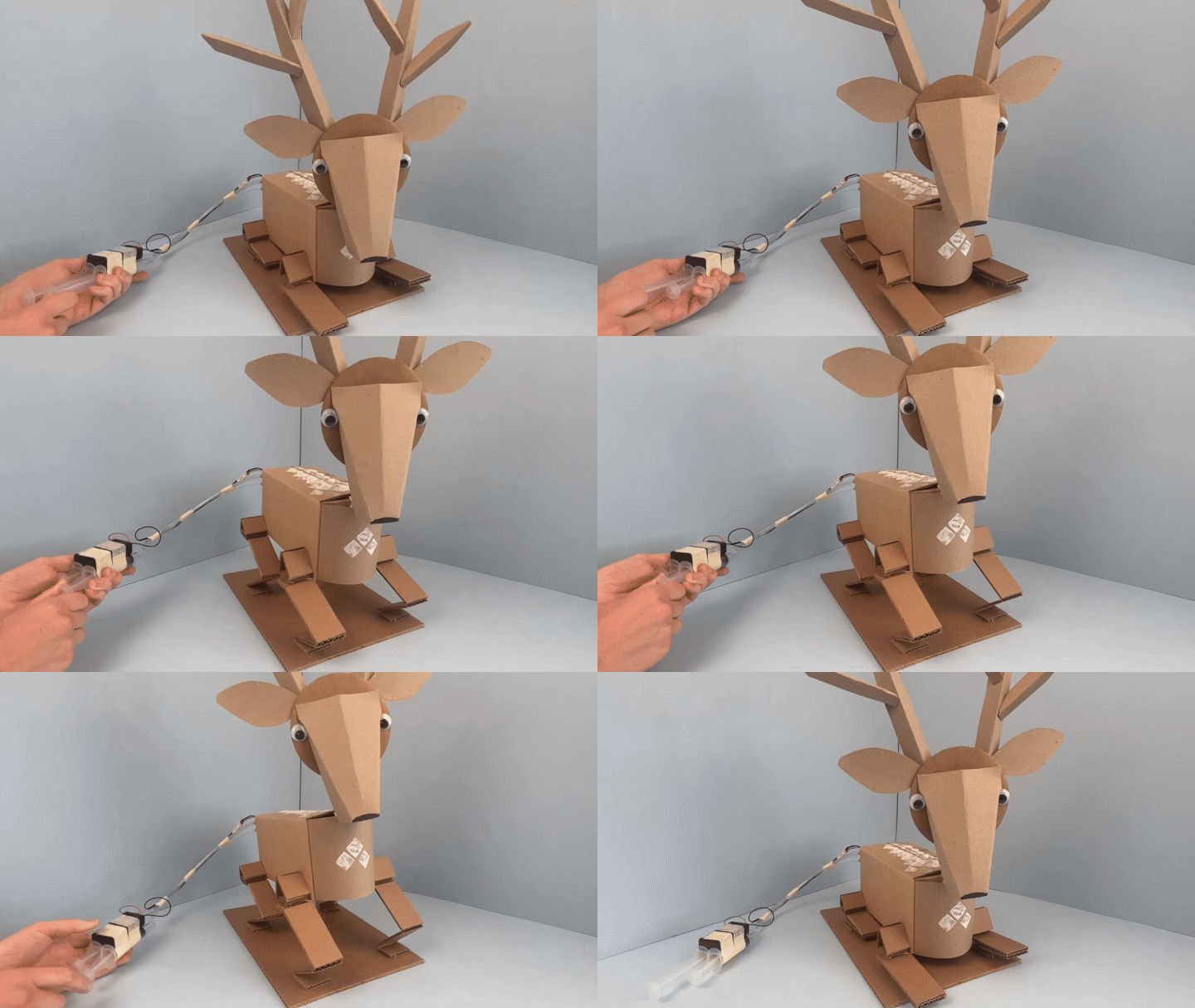
This can cause a range of feelings, from curiosity to frustration to exasperation. While it might seem easiest for the instructor to jump in and fix the problem (i.e., move the tape anchor farther away from the hinge), this would offer exactly the type of “rescue” that 5 Strategies to Free the Anxious Generation authors Jonathan Haidt and Dr. Becky Kennedy warn us about: “When we ‘rescue’ our kids by stepping in too fast and doing things for them that they can do for themselves, we end up building our child’s anxiety and fragility, because our kids never experience themselves as capable of coping and getting through tricky experiences.”
Instead, Galileo instructors are trained to ask strategic questions:
- “What do you think is happening here?”
- “What have you tried so far?”
- “What could you try next?”
Questions like these do something powerful: They keep the thinking and problem-solving ownership with the child, while encouraging persistence and troubleshooting.
This approach builds what developmental psychologists call coping skills, or the ability to manage difficult emotions and persist through challenges. When children work through their frustrations and arrive at their own solutions, they’re not just solving the immediate problem—they’re building confidence in their ability to handle future obstacles.
Both at camp and at home, enabling this type of powerful learning requires patience and restraint, because no matter how uncomfortable it is to watch our children struggle, we know persisting through challenges and making mistakes are part of learning.
At home, when kids seek help with something you know they can achieve with effort, recognize their feelings and ask supportive questions that can help them persevere and resolve their challenges. Here are some examples of everyday situations where guiding questions can replace a quick fix:
- Frustration with a task or homework
- Recognize: “I see you’re frustrated with your math homework.”
- Try asking: “What part is making it difficult?” “Can you show me what you’ve tried so far?” “What would you do if the question was (insert a simpler or partial problem that may help them get back on track)?”
- Problem with a sibling or friend
- Recognize: “It sounds like it’s difficult to agree about what to play.”
- Try asking: “What have you tried to do to solve this?” “What do you think your sibling/friend is feeling?” “What would be a fair way to handle this for both of you?”
While it’s tough to fight the natural instinct to just resolve whatever’s making our kids uncomfortable, jumping in with a quick fix ultimately deprives them of the opportunity to build belief in their own abilities and experience themselves as capable, independent thinkers and problem solvers.
Stay tuned for the final post in this series, featuring our third strategy for building creative confidence and an innovator’s mindset!